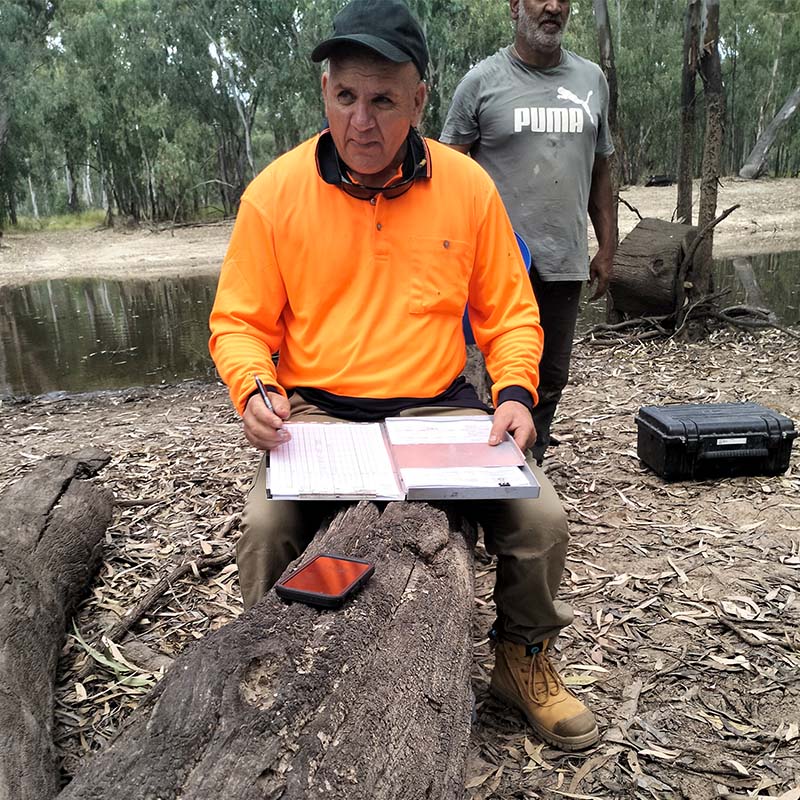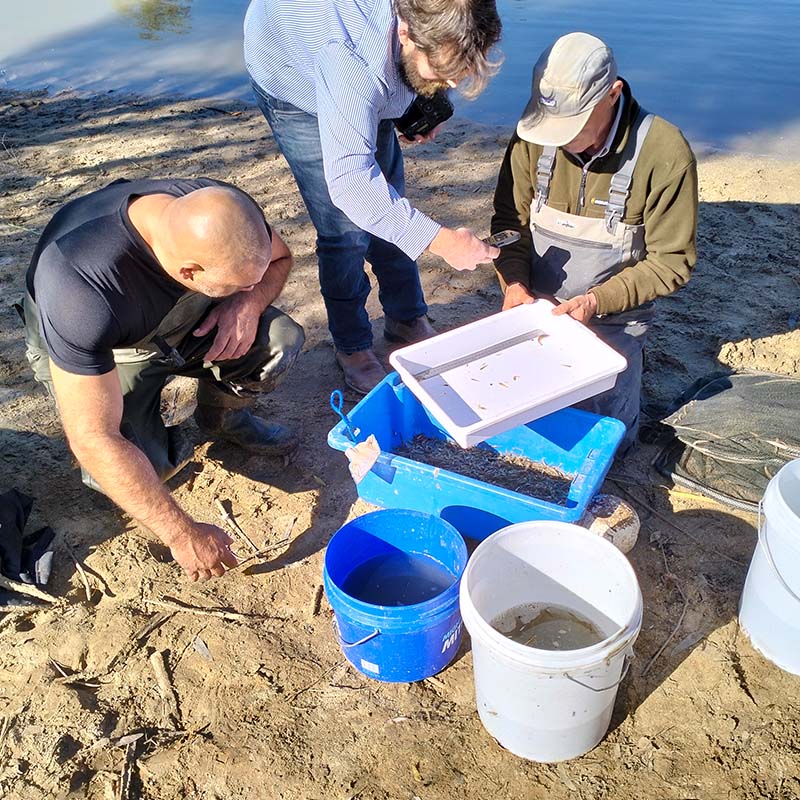
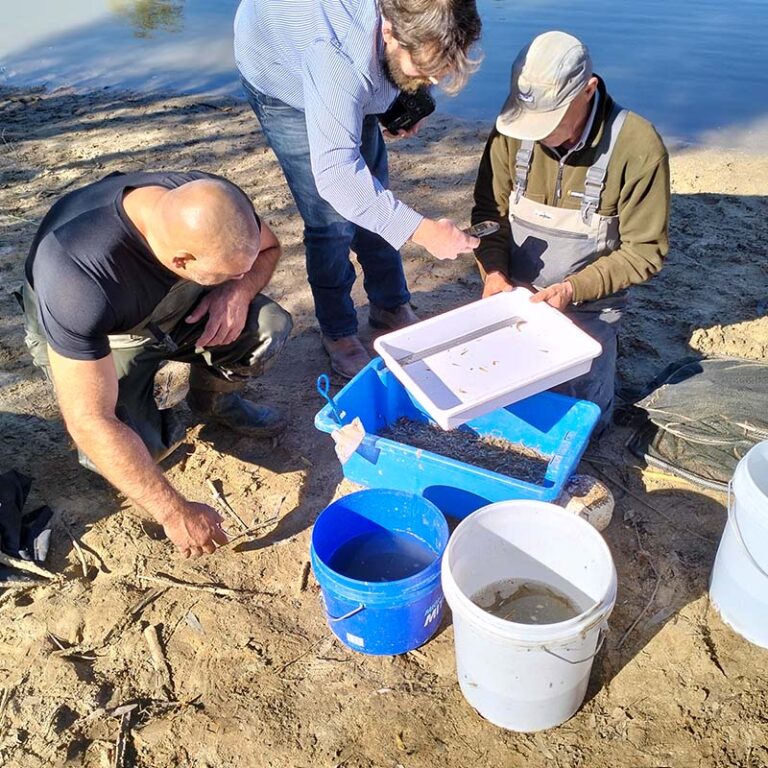
Moama Local Aboriginal Land Council undertakes annual fish monitoring programs throughout the Koondrook–Perricoota Forest to assess the health of aquatic ecosystems and monitor the distribution of native and invasive fish species across wetlands, lagoons, creeks, and floodplain waterways.
Working alongside environmental agencies, researchers, and project partners, our crews conduct on-ground surveys to gather important ecological information that supports the management and protection of aquatic habitats throughout the forest.
Monitoring Native and Invasive Species
Fish monitoring provides valuable information about fish populations, breeding success, habitat condition, water quality, and the movement of species throughout the floodplain system.
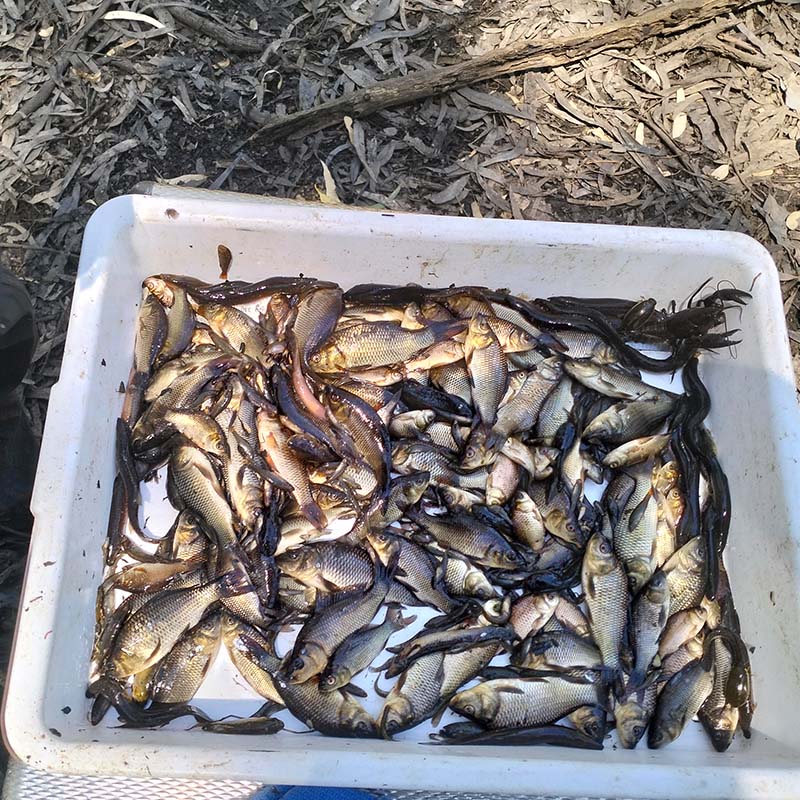
Our monitoring programs target both native fish species and invasive species such as European Carp, allowing land managers to better understand ecosystem health and identify emerging environmental threats.
Field Monitoring Techniques
Moama LALC crews use a variety of approved monitoring methods, including:
Fyke net surveys.
Light trapping.
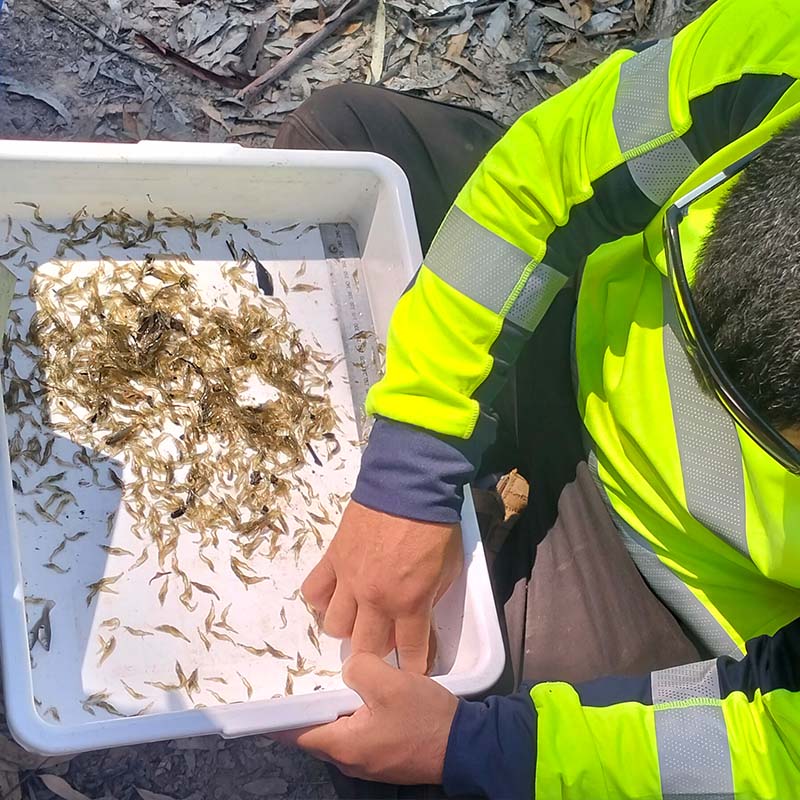
Species identification and classification.
Fish population assessments.
Habitat condition monitoring.
Aquatic biodiversity surveys.
These techniques allow us to monitor fish communities across a range of habitats and seasonal conditions throughout the forest.
Data Collection and Recording
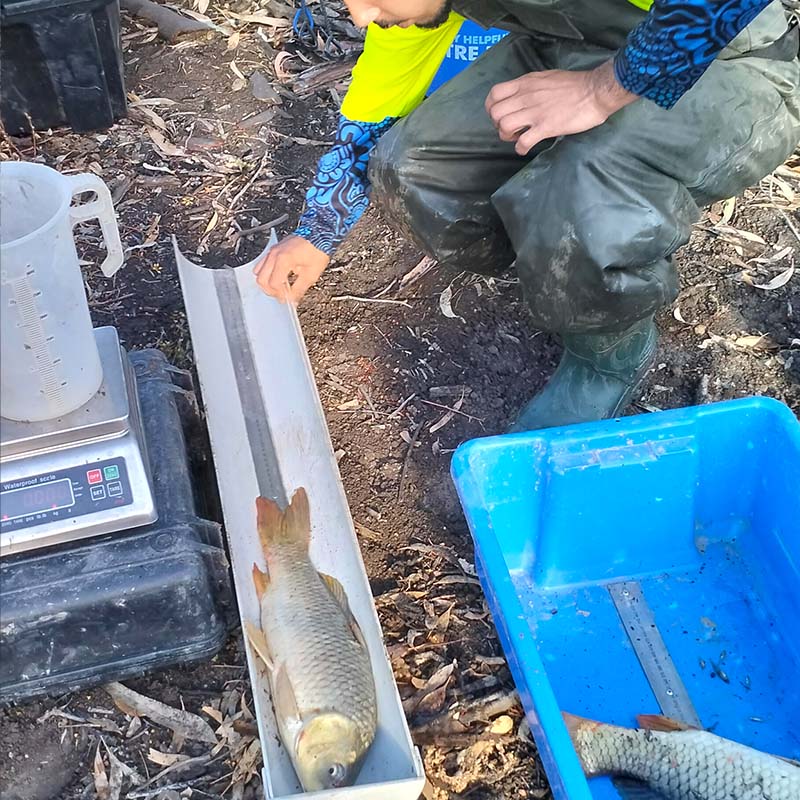
During monitoring activities, crews carefully process captured fish and record important scientific data, including:
Species identification.
Fish length measurements.
Individual and total weights.
Population abundance.
Distribution across wetlands and waterways.
Presence of juvenile fish and breeding activity.
Occurrence of invasive species.
All information collected contributes to long-term ecological monitoring programs and helps guide environmental water management, wetland restoration projects, and invasive species control programs.
Supporting Healthy Wetlands
The information gathered through fish monitoring assists in protecting and restoring important aquatic habitats. Healthy fish populations are a key indicator of healthy waterways and provide benefits throughout the broader ecosystem, supporting turtles, waterbirds, aquatic vegetation, and culturally significant species.
By monitoring fish populations over time, Moama LALC helps ensure that management decisions are based on sound ecological data while maintaining a strong connection between Traditional Owner knowledge and contemporary environmental science.
Caring for Country
Fish monitoring is an important part of Moama LALC’s Caring for Country program. Through ongoing field surveys and environmental monitoring, we contribute to the protection of native species, the restoration of wetland ecosystems, and the long-term health of the Koondrook–Perricoota Forest for future generations.