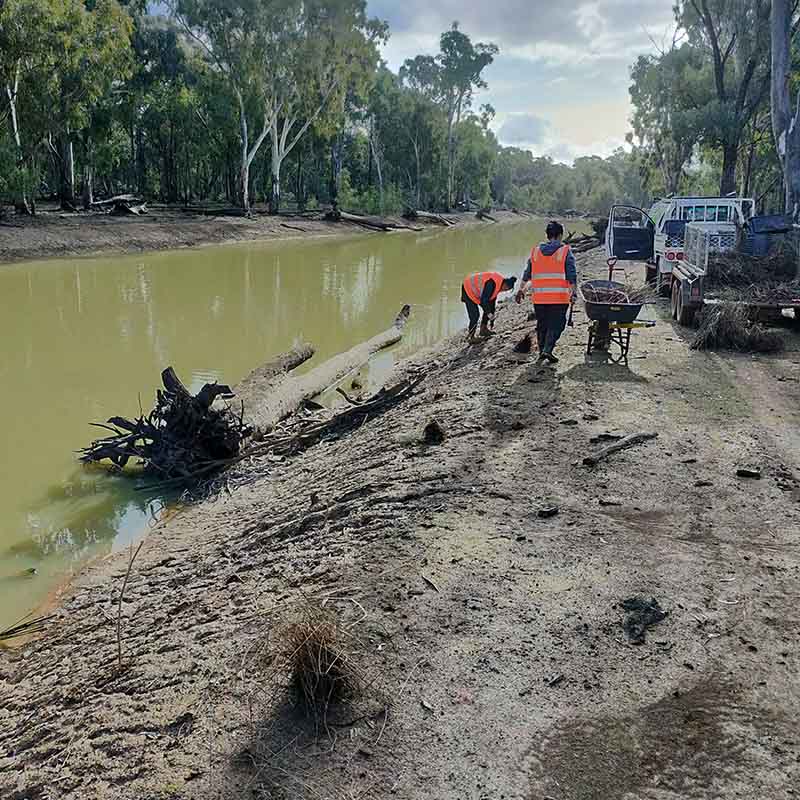
Moama Local Aboriginal Land Council’s Natural Resource Management (NRM) Crew has undertaken extensive revegetation and habitat restoration projects throughout the Murray-Darling Basin, including the Koondrook–Perricoota Forest, Millewa Forest, Moira Forest, and surrounding landscapes.
Working alongside Forestry Corporation NSW, National Parks and Wildlife Service, Murray Local Land Services, Landcare groups, and other environmental partners, Moama LALC is restoring degraded landscapes and improving the health of wetlands, waterways, and floodplain ecosystems.
Restoring Country Through Revegetation
The revegetation program focuses on restoring native vegetation communities in areas that have experienced disturbance, erosion, reduced regeneration, or habitat loss.
Sites are carefully selected based on:
Environmental condition.
Cultural significance.
Connectivity to existing habitat.
Water management opportunities.
Potential for natural regeneration.
Wildlife habitat requirements.
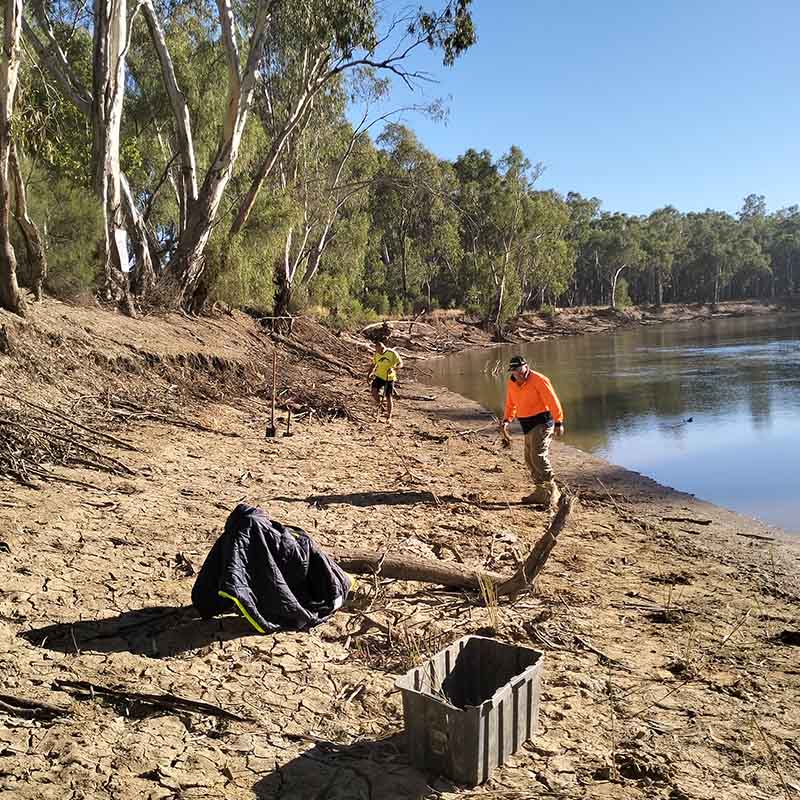
A major focus has been restoring wetlands and water inflow areas where floodwaters naturally spread across the forest. These locations play a critical role in distributing native seed throughout the floodplain during environmental watering events and natural floods.
Supporting Natural Regeneration
Many projects are designed to increase the natural movement of native seed through flood events and environmental watering, helping restore plant populations across large areas of forest.
By strengthening vegetation around waterways and wetlands, revegetation efforts help:
Improve habitat connectivity.
Stabilise soils and reduce erosion.
Increase natural seed dispersal.
Improve water quality.
Support native wildlife populations.
Enhance resilience to drought and climate change.
Culturally Informed Species Selection
Plant species are carefully selected using a combination of Traditional Ecological Knowledge and contemporary ecological restoration principles.
Species are chosen to provide:
Habitat and shelter for wildlife.
Food resources for birds, mammals, reptiles, and insects.
Cultural food and medicine plants.
Traditional resource species.
Improved biodiversity outcomes.
Long-term ecosystem resilience.
Sustainable Plant Collection and Propagation
Moama LALC sources native plants through:
Collection of local seed from healthy native populations.
Harvesting plant material from approved locations.
Partnerships with native plant nurseries and suppliers.
Propagation of local provenance species where available.
All plant stock is inspected and cleaned prior to planting to minimise the risk of introducing weeds, pests, diseases, or unwanted contaminants into restoration sites.
Planting and Site Maintenance
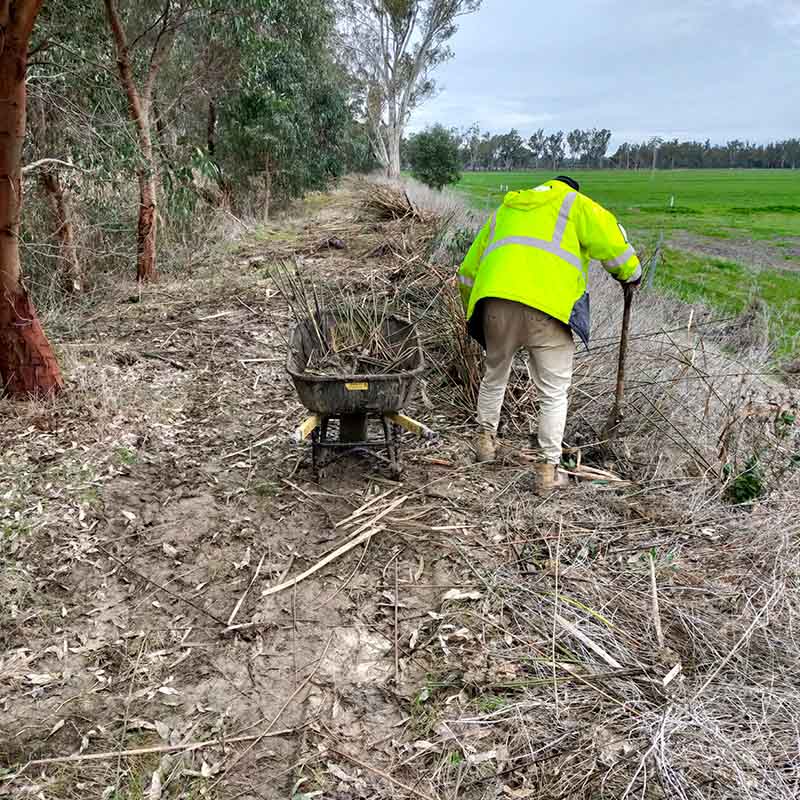
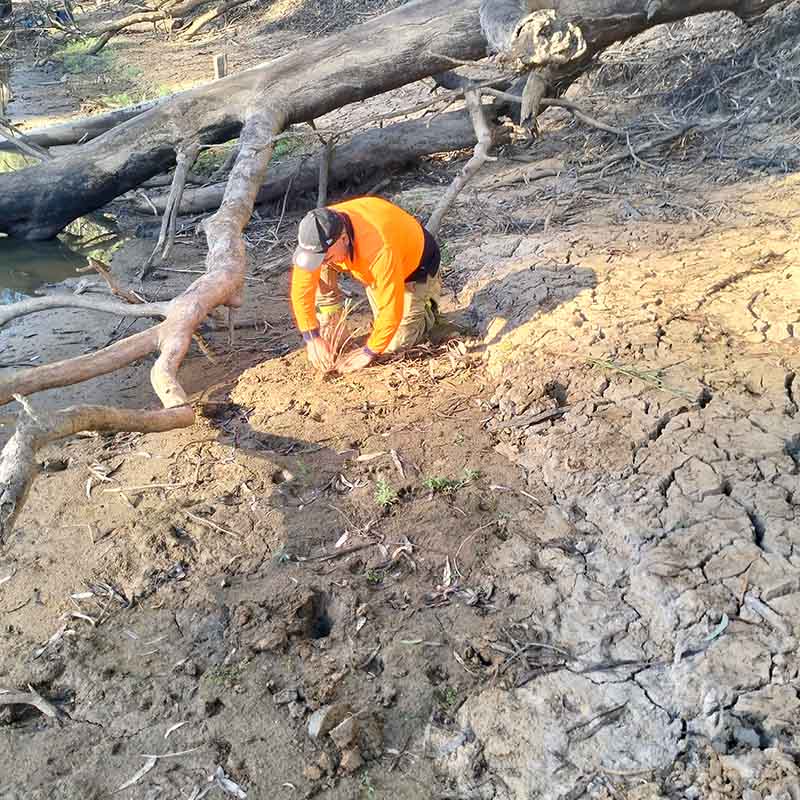
Following site preparation, native seedlings are planted in strategic locations to maximise survival and ecological outcomes.
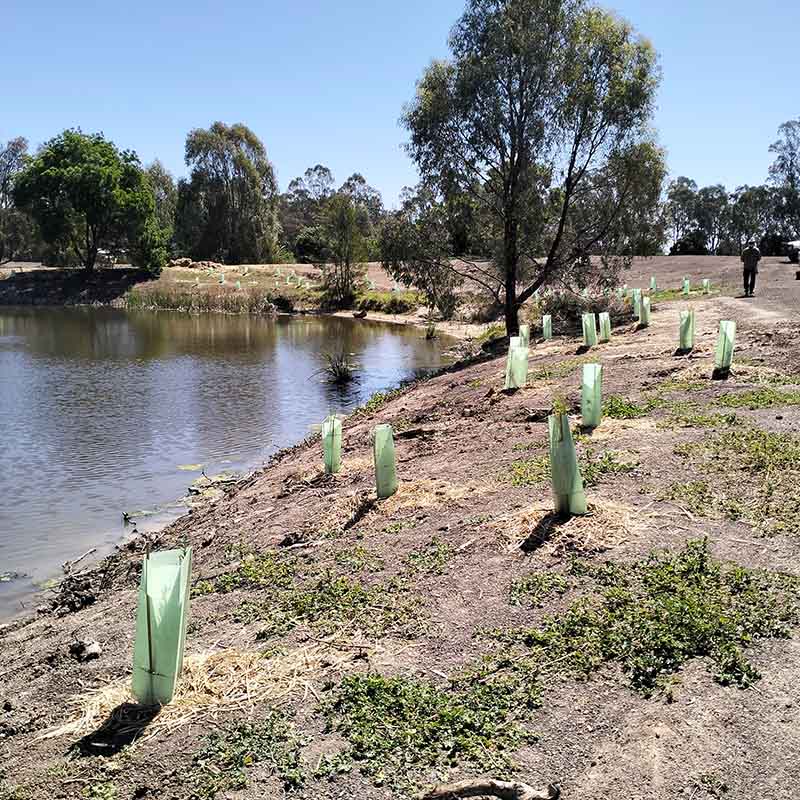
Protective guards and fencing are used where required to protect young plants from grazing and environmental damage.
The NRM Crew regularly returns to restoration sites to:
Monitor plant survival.
Replace failed seedlings.
Control weeds.
Assess habitat development.
Repair guards and protection structures.
Evaluate project outcomes.
Managing Threats to Restoration Sites
A significant component of ongoing site maintenance involves monitoring and responding to impacts from invasive animals, including:
Feral pigs.
Deer.
Rabbits.
Foxes.
Other pest species.
These animals can damage young vegetation through grazing, trampling, rooting, and soil disturbance.
Regular inspections help identify areas requiring additional protection and pest management interventions to ensure revegetation projects remain successful over the long term.
Building Healthy Wetlands and Forest Ecosystems
Through strategic revegetation, habitat restoration, and ongoing maintenance, Moama LALC is helping rebuild healthy ecosystems across the Murray-Darling Basin.
These projects contribute to:
Increased biodiversity.
Improved wetland function.
Enhanced wildlife habitat.
Stronger cultural landscapes.
Greater resilience to environmental change.
Long-term protection of Country for future generations.
By combining cultural knowledge with practical land management, Moama LALC continues to demonstrate leadership in restoring and caring for Country throughout the region.