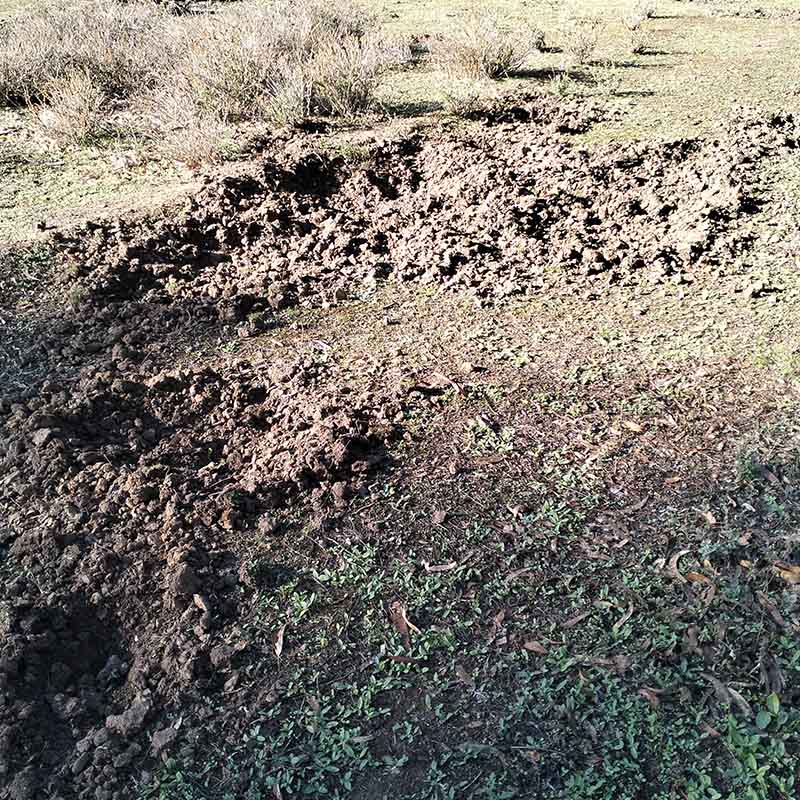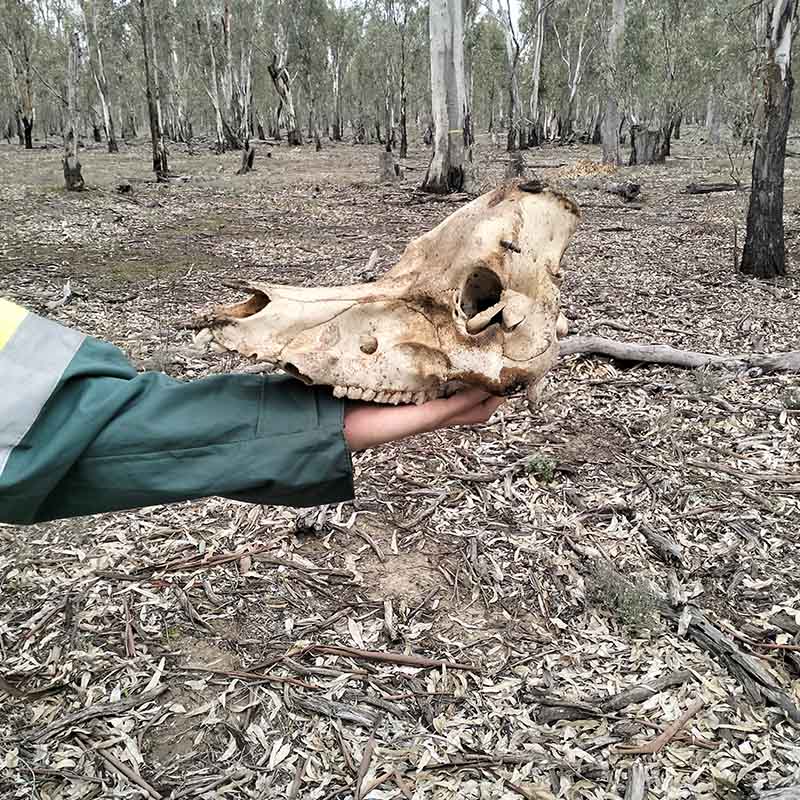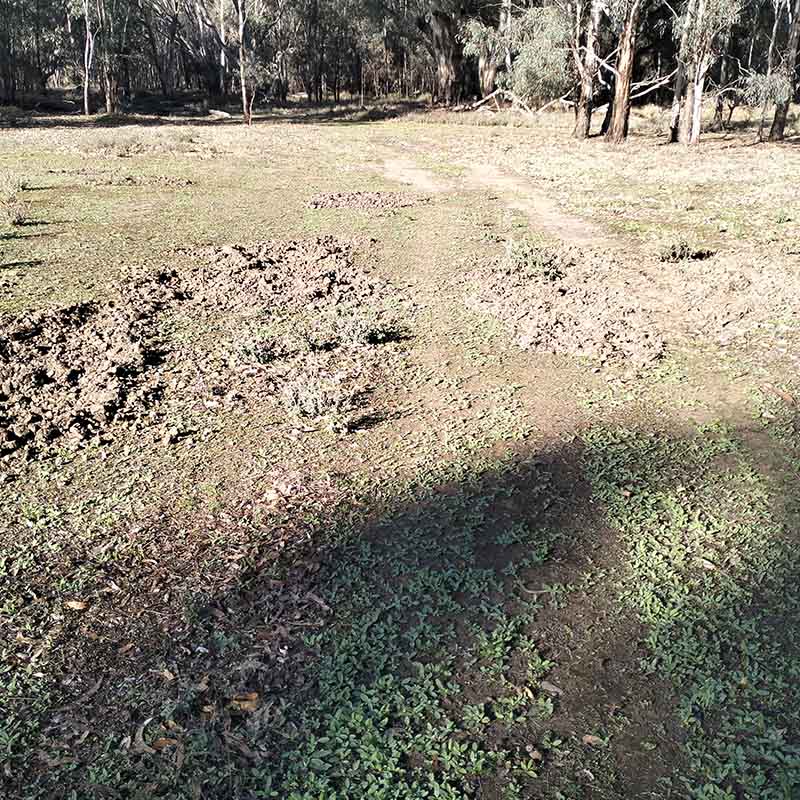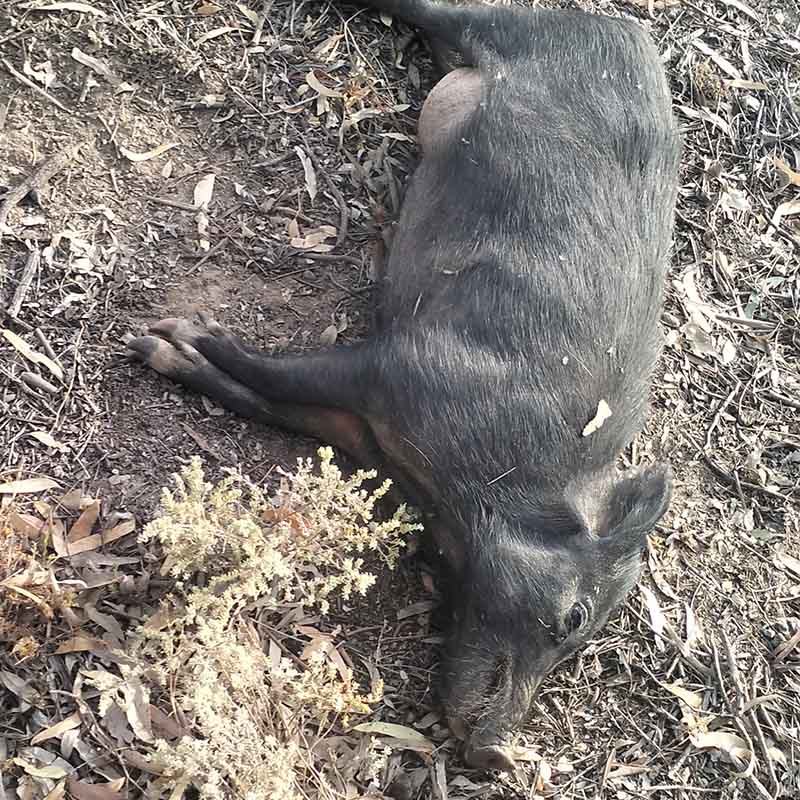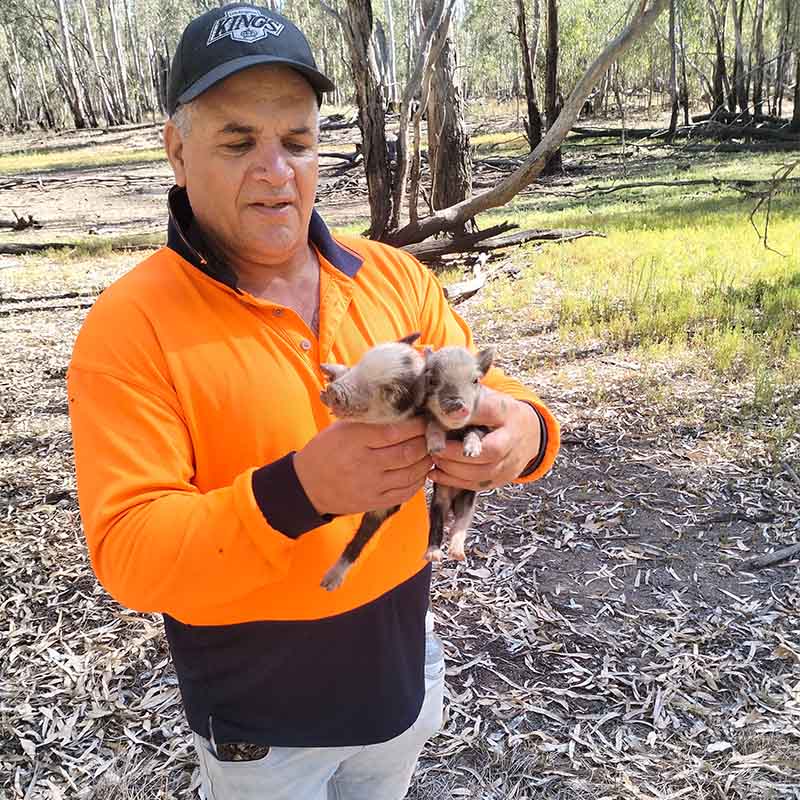
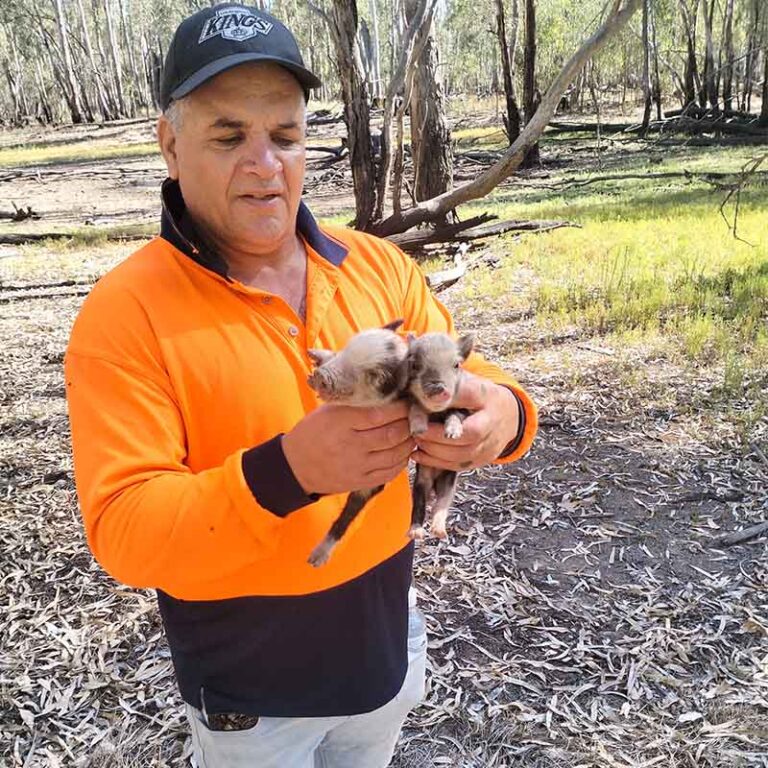
Feral pigs are a significant environmental threat throughout the Koondrook–Perricoota Forest, causing extensive damage to wetlands, native vegetation, cultural sites, and wildlife habitat. Their rooting and wallowing behaviour disturbs soil structure, damages wetland vegetation, reduces water quality, and creates ideal conditions for weed invasion.
Moama Local Aboriginal Land Council works with partner agencies to monitor, manage, and reduce feral pig populations across the forest through targeted control programs and on-ground surveillance.
Protecting Wetlands and Cultural Landscapes
Feral pigs can cause substantial damage to floodplain wetlands and sensitive ecological areas. Their feeding behaviour uproots native vegetation, destroys habitat for small animals, impacts waterbird breeding areas, and accelerates erosion throughout the landscape.
Pig activity can also threaten Aboriginal cultural heritage by disturbing culturally significant sites and altering important cultural landscapes that have been cared for by Traditional Owners for thousands of years.
Pig Monitoring and Control Programs
Moama LALC has undertaken feral pig trapping operations within the Pollack Swamp area and other sections of the Koondrook–Perricoota Forest to help reduce local pig populations and assess the extent of pig activity across the floodplain.
Our crews regularly:
Monitor pig activity and movement throughout the forest.
Identify active rooting and wallowing areas.
Locate breeding areas and high-density populations.
Record signs of environmental damage.
Assist with population monitoring and reporting.
Support coordinated feral animal control programs.
Working with Government Agencies
Moama LALC works closely with Forestry Corporation of NSW and Murray Local Land Services to support regional feral pig management programs.
This includes:
Identifying pig hotspots and areas of concern.
Conducting on-ground assessments of pig activity.
Assisting with the placement and monitoring of control sites.
Supporting Forestry Corporation’s feral pig baiting programs.
Providing local knowledge to improve the effectiveness of control operations.
Our crews help identify locations suitable for 1080 grain feeder deployment, ensuring control efforts are targeted towards areas where pig activity is causing the greatest environmental impact.
Reducing Environmental Impacts
Effective feral pig management helps protect:
Native vegetation communities.
Wetland ecosystems.
Waterbird breeding habitat.
Native fish habitat.
Cultural heritage sites.
Water quality and soil health.
Reducing pig numbers allows damaged areas to recover naturally and helps maintain the ecological values of the Koondrook–Perricoota Forest.
Caring for Country
Feral pig management is an important component of Moama LALC’s Caring for Country program. By working alongside government agencies and environmental partners, we contribute to the protection of culturally significant landscapes, the restoration of damaged habitats, and the long-term health of Country for future generations.