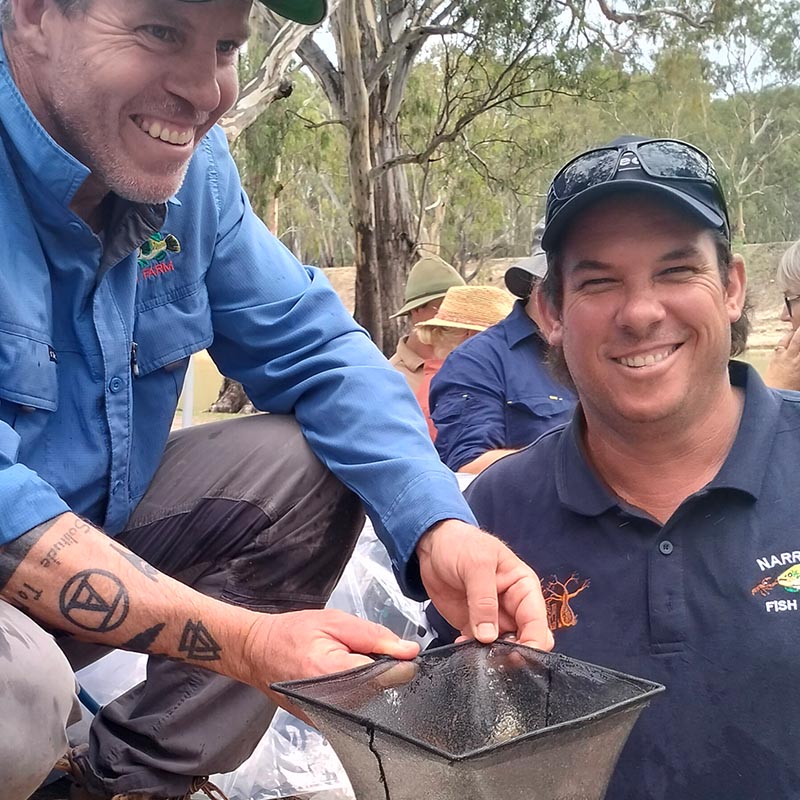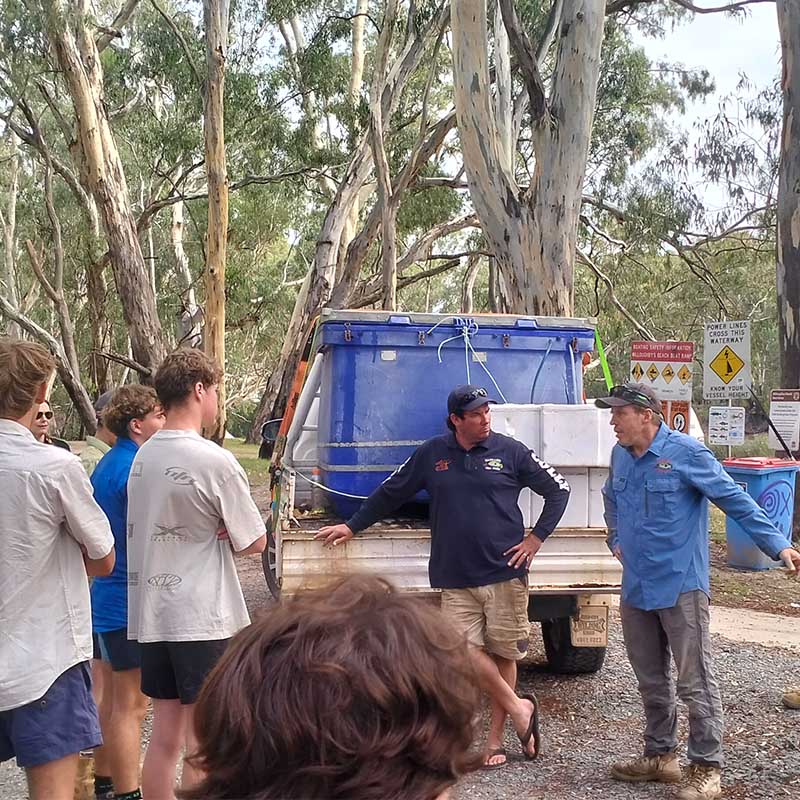
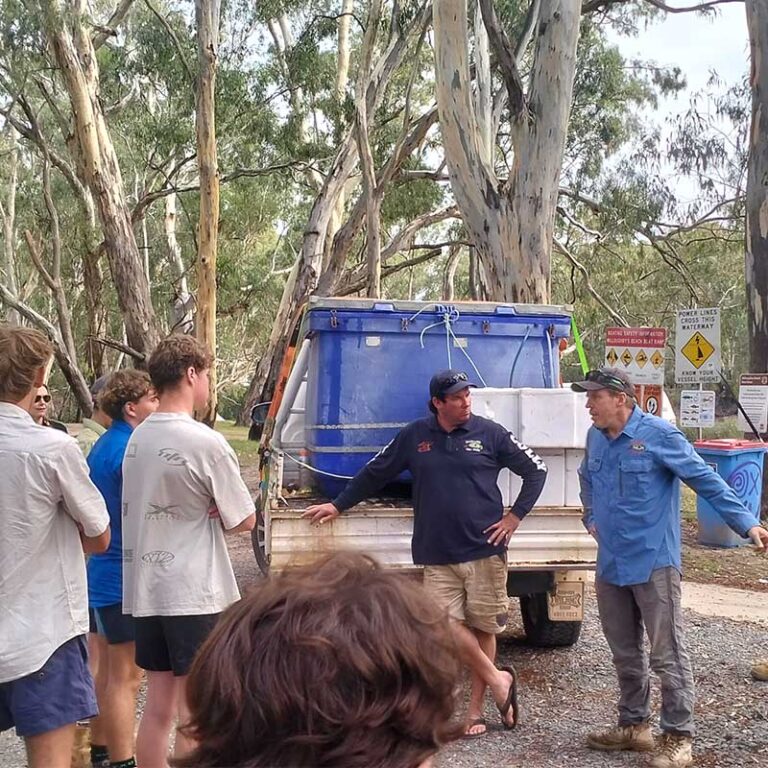
Moama Local Aboriginal Land Council is actively involved in native fish recovery programs throughout the Murray-Darling Basin, working alongside National Parks and Wildlife Service, Forestry Corporation, fisheries specialists, and other land management groups to restore native fish populations within the Koondrook–Perricoota and Millewa Forests.
Over recent decades, many native fish species have experienced significant population declines due to habitat degradation, barriers to fish movement, reduced flooding events, declining water quality, and the impacts of invasive species such as European carp. Carp contribute to the destruction of aquatic vegetation and wetland habitats by stirring sediments, increasing water turbidity, and reducing the quality of breeding and feeding environments for native fish.
Native Fish Restocking Programs
Moama LALC has participated in native fish release programs designed to rebuild populations of important Murray-Darling Basin species and improve the long-term health of floodplain ecosystems.
These programs involve:
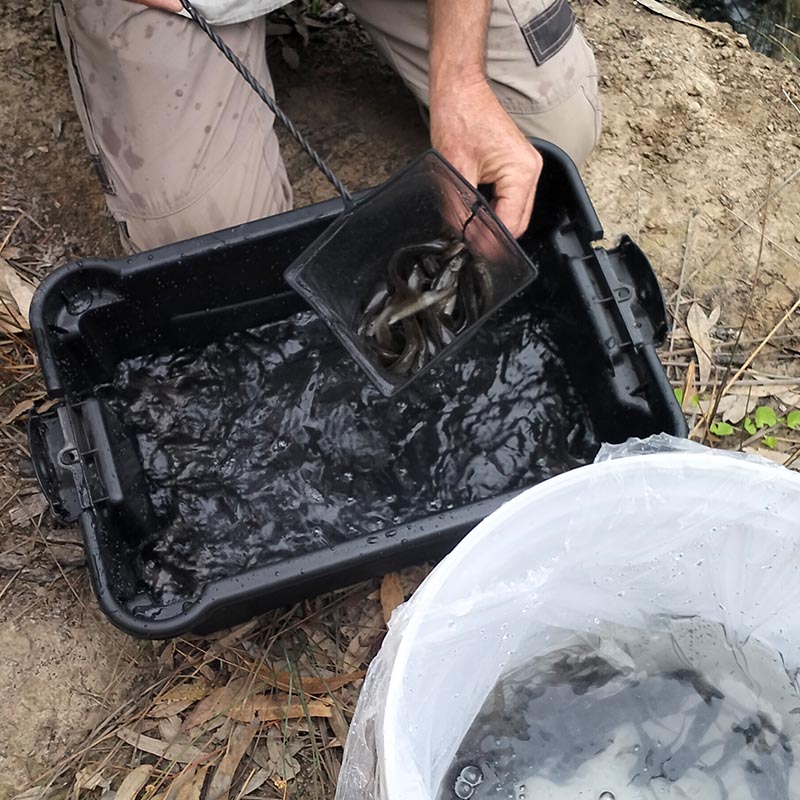
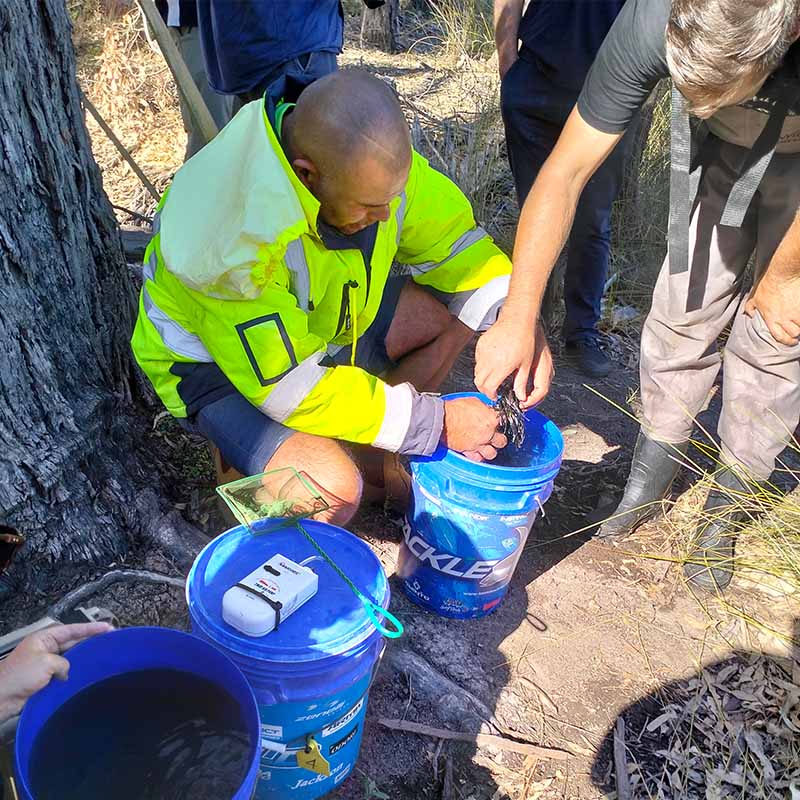
Transporting and releasing native fish into suitable wetland habitats.
Assisting with fish handling and acclimatisation before release.
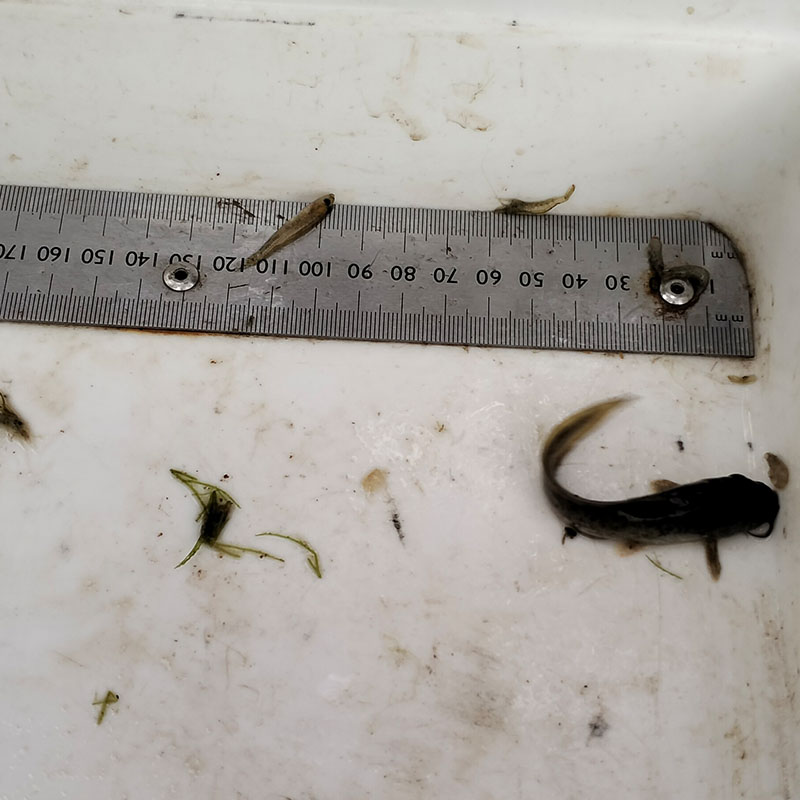
Monitoring fish survival and habitat conditions.
Supporting long-term recovery of native fish populations.
Providing cultural and environmental knowledge to guide restoration efforts.
Reintroduction of Native Catfish
A key project has involved the reintroduction of native freshwater catfish into wetlands and waterways connected to the Koondrook–Perricoota Forest and wider Murray-Darling Basin.
Once common throughout the Murray River system, native catfish populations have declined significantly due to habitat loss, altered river flows, and competition from invasive species. Through collaborative recovery efforts, native catfish are being returned to areas where they have historically occurred, helping to restore natural ecological balance and biodiversity.
Working in Partnership
Moama LALC works closely with:
National Parks and Wildlife Service
Forestry Corporation of NSW
Fisheries specialists and researchers
Murray Local Land Services
Environmental water managers
Traditional Owners and community groups
These partnerships combine scientific monitoring with Traditional Ecological Knowledge to improve outcomes for native fish and wetland ecosystems.
Monitoring Success
Fish release programs are supported by ongoing monitoring activities to assess:
Fish survival rates.
Growth and recruitment of released fish.
Habitat condition and water quality.
Presence of invasive species.
Recovery of wetland vegetation and aquatic habitats.
The information collected helps guide future management actions and ensures fish recovery programs deliver long-term benefits for the ecosystem.
Caring for Country Through Restoration
Native fish restoration is an important part of Moama LALC’s Caring for Country approach. Rebuilding healthy fish populations helps restore cultural connections to waterways, improves biodiversity, supports ecosystem resilience, and contributes to the long-term recovery of the Murray-Darling Basin’s unique floodplain environments.