Moama Local Aboriginal Land Council’s Natural Resource Management (NRM) Crew undertakes targeted rabbit control programs throughout the Murray-Darling Basin, including the Koondrook–Perricoota Forest, Millewa Forest, Moira Forest, and surrounding public and private lands.
Working in partnership with Forestry Corporation NSW, National Parks and Wildlife Service, Murray Local Land Services, landholders, and other environmental agencies, these programs help reduce the significant environmental, cultural, and economic impacts caused by rabbit populations.
Protecting Country from Rabbit Impacts
Rabbits are one of Australia’s most damaging introduced pest species. Large populations can rapidly degrade native ecosystems through:
Overgrazing of native vegetation.
Destruction of seedlings and revegetation sites.
Competition with native wildlife for food resources.
Soil erosion and land degradation.
Damage to wetlands and riparian areas.
Loss of habitat for native animals.
Disturbance to culturally significant sites and landscapes.
Rabbit activity can severely limit the success of revegetation and habitat restoration projects by preventing young native plants from establishing and surviving.
Integrated Rabbit Management
Moama LALC employs a range of best-practice control techniques to manage rabbit populations across the landscape.
These methods include:
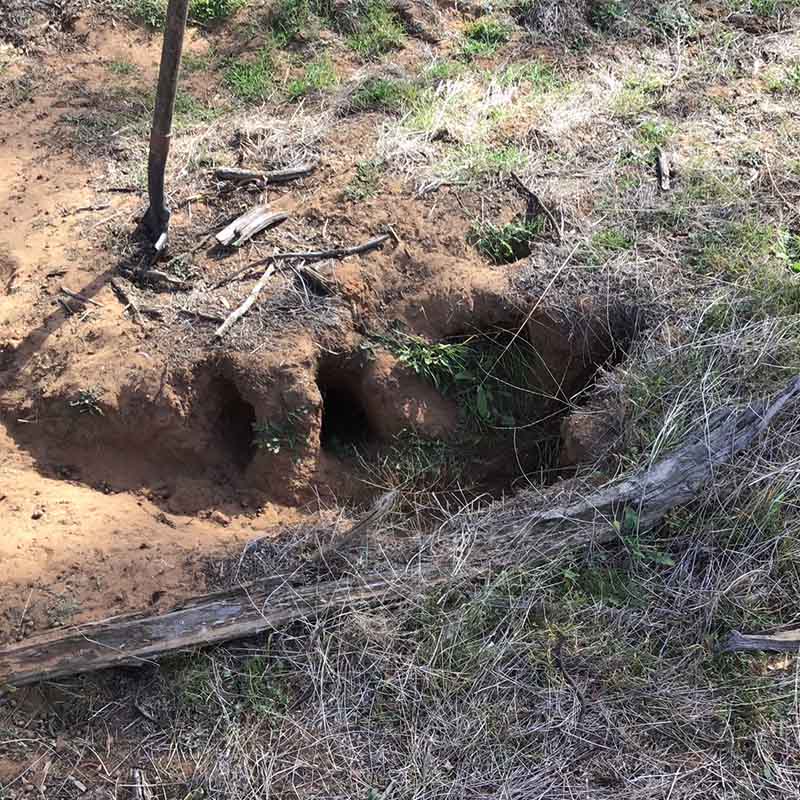
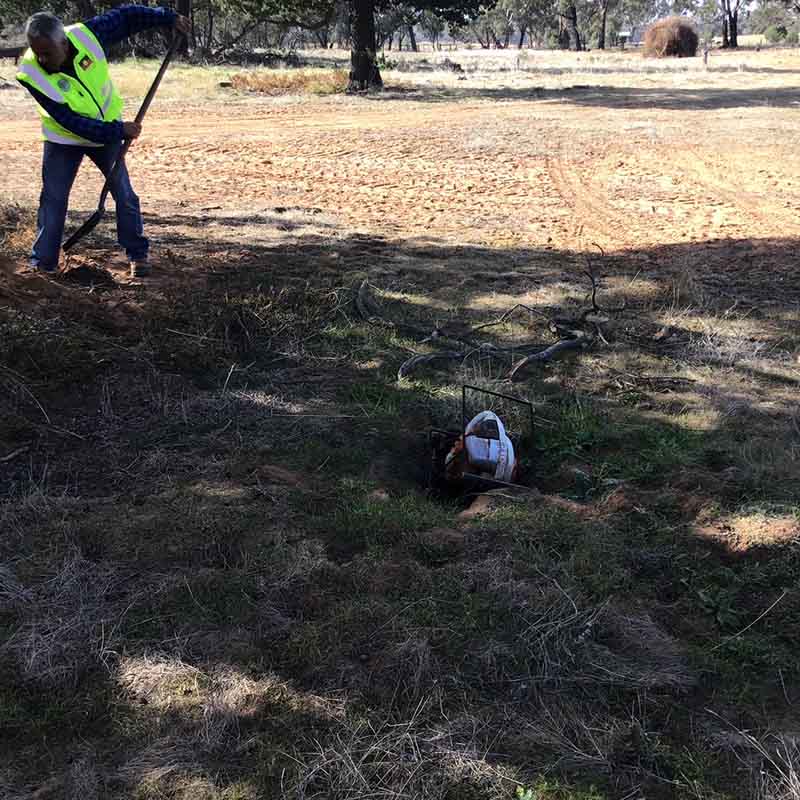
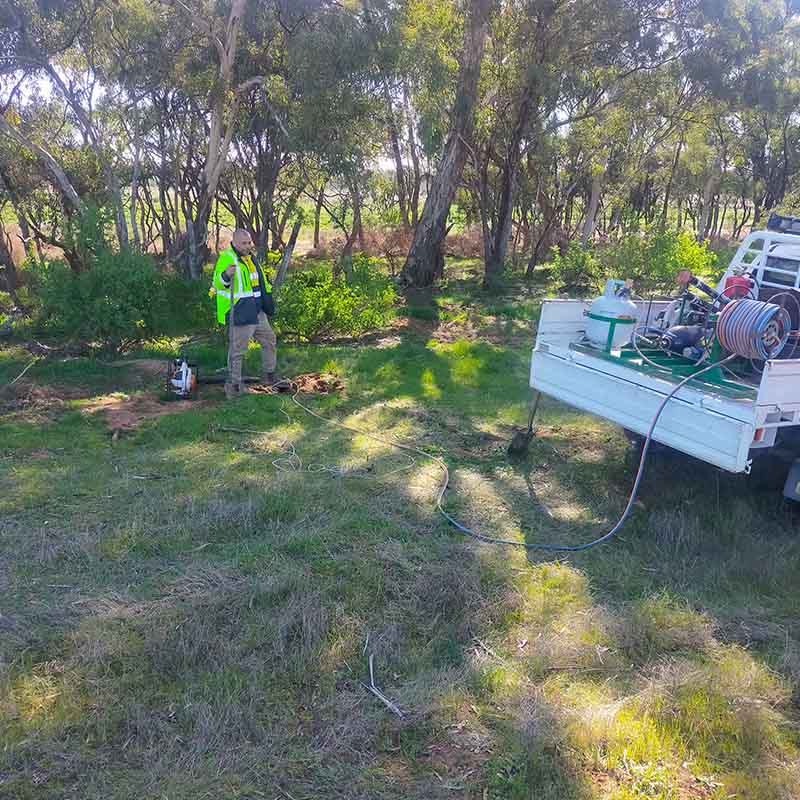
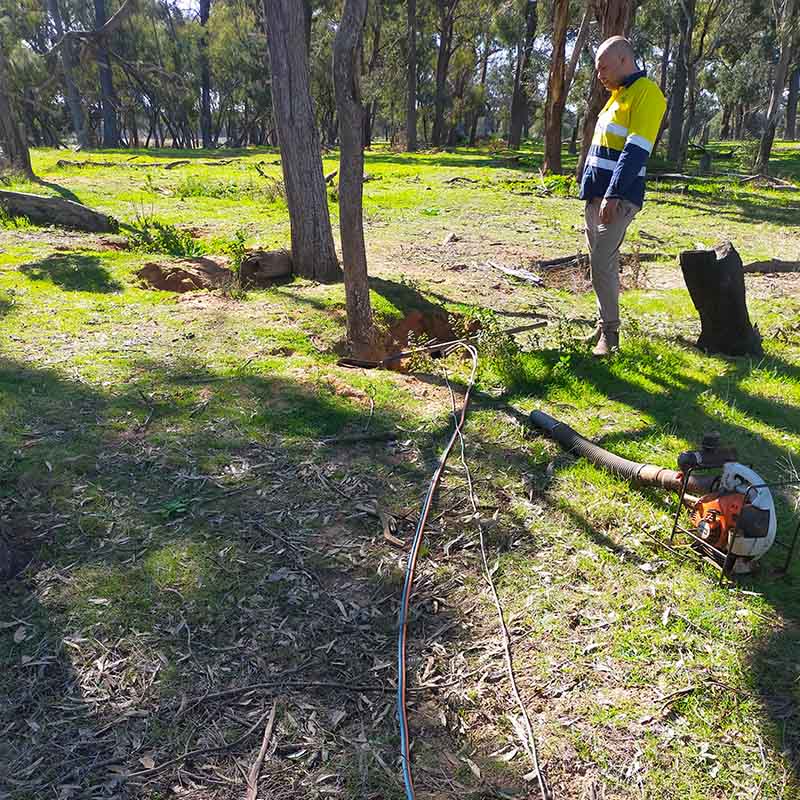
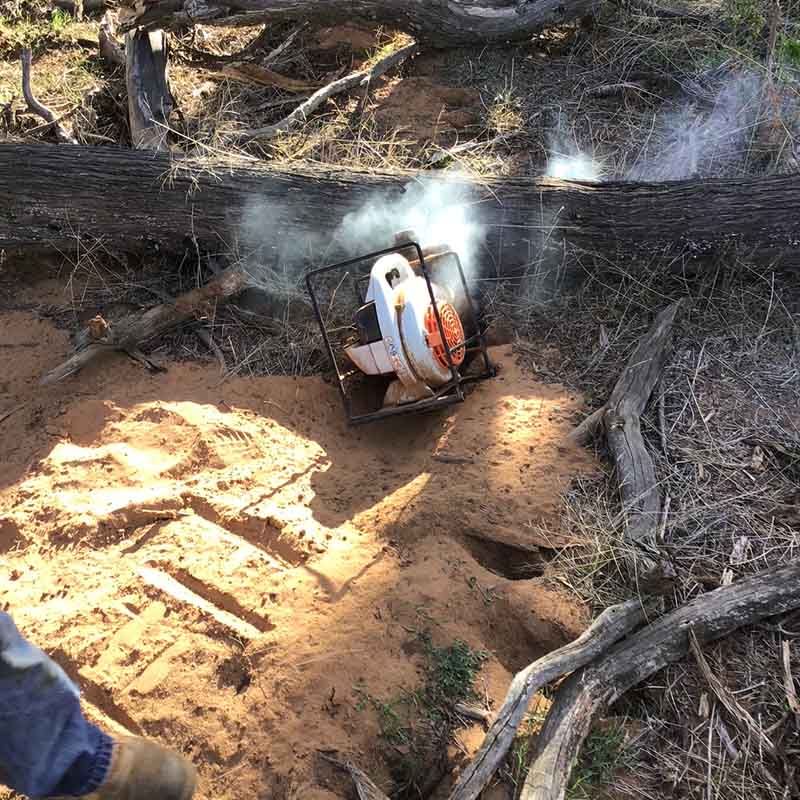
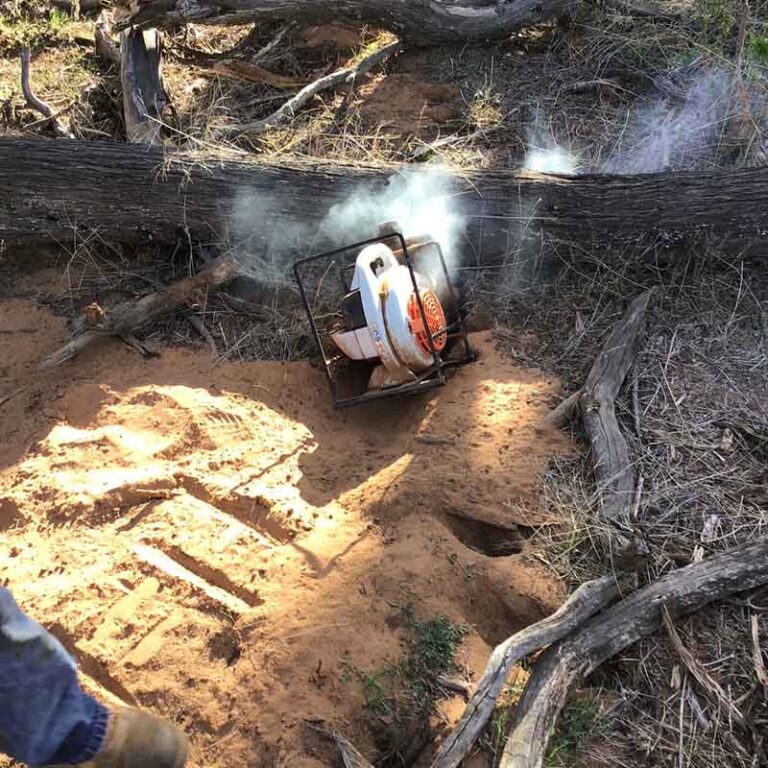
Fumigation of Active Warrens
Active rabbit warrens are identified and treated using approved fumigation methods to remove rabbits sheltering underground.
Fumigation is an effective control technique where warrens are extensive and actively used, helping reduce local rabbit populations before breeding seasons.
1080 Carrot Baiting Programs
Targeted baiting programs using 1080-treated carrots are undertaken in accordance with strict regulatory requirements and best-practice pest management guidelines.
These programs are carefully planned to:
Maximise effectiveness.
Minimise impacts on non-target species.
Reduce rabbit numbers over large areas.
Protect revegetation and restoration sites.
Warren Destruction and Burrow Implosion
Following fumigation and baiting programs, rabbit warrens are physically destroyed using specialised equipment, including R3 burrow-ripping units.
This process:
Collapses underground tunnel systems.
Prevents rabbits from reoccupying warrens.
Reduces breeding opportunities.
Provides long-term population control.
Destroying warrens is often the most effective long-term solution for preventing rabbit populations from quickly re-establishing.
Protecting Environmental and Cultural Values
Rabbit control programs play a vital role in protecting:
Native vegetation communities.
Revegetation projects.
Wetlands and waterways.
Wildlife habitat.
Threatened species.
Aboriginal cultural heritage sites.
Scar trees, artefact scatters and culturally significant landscapes.
By reducing grazing pressure and soil disturbance, native plants have a greater opportunity to regenerate naturally and establish healthy populations.
Supporting Landscape Restoration
Rabbit management is often integrated with broader restoration activities, including:
Native revegetation.
Weed management.
Wetland rehabilitation.
Riparian restoration.
Cultural site protection.
Biodiversity conservation programs.
This integrated approach helps ensure long-term environmental outcomes and increases the success of habitat restoration projects throughout the Murray-Darling Basin.
Caring for Country
Through ongoing pest animal management, Moama LALC continues to protect Country from the impacts of invasive species while supporting the recovery of native ecosystems and culturally important landscapes for future generations