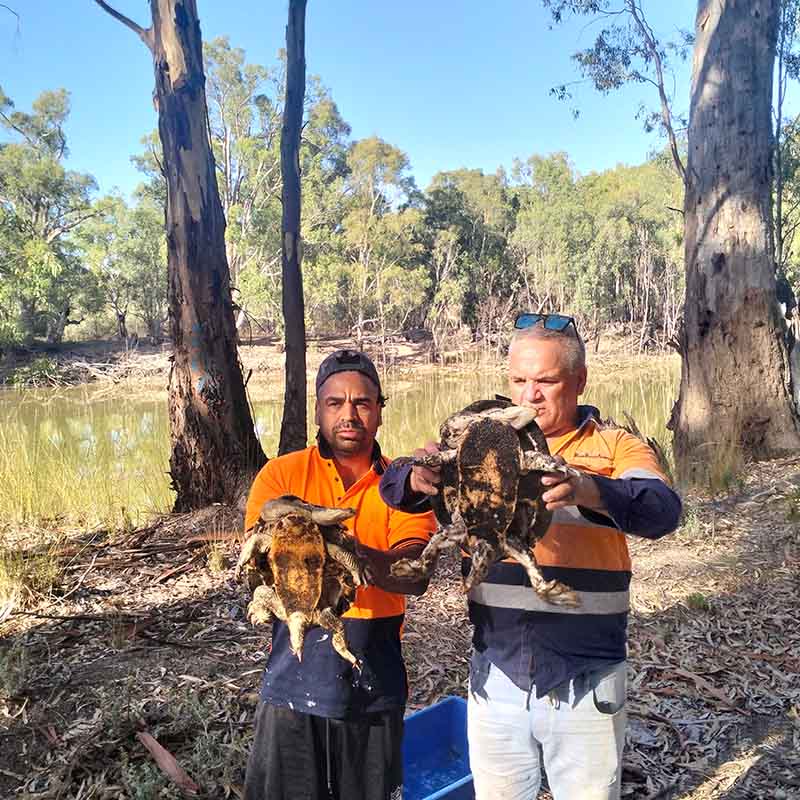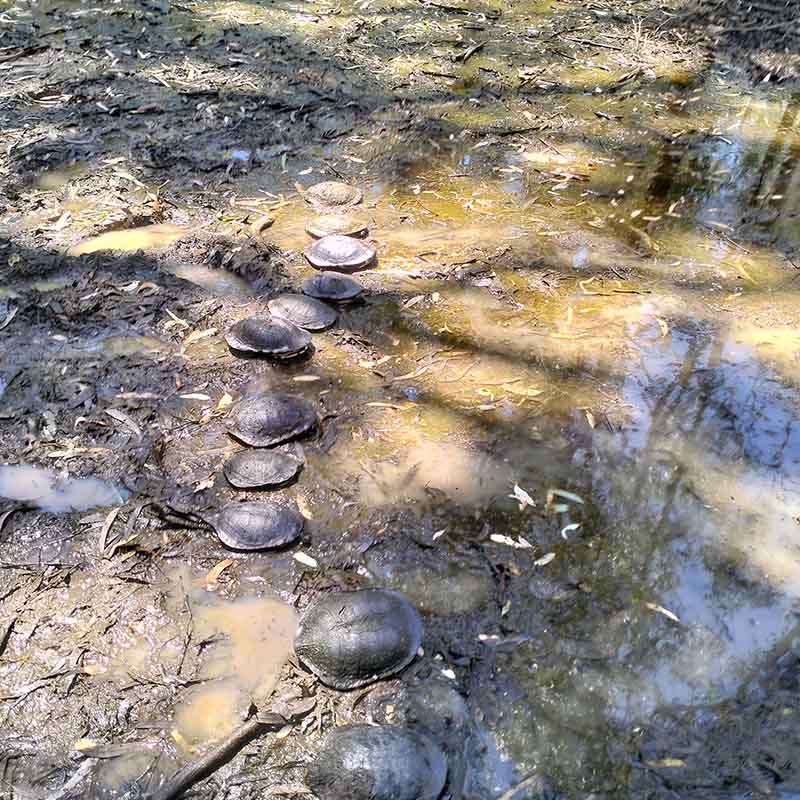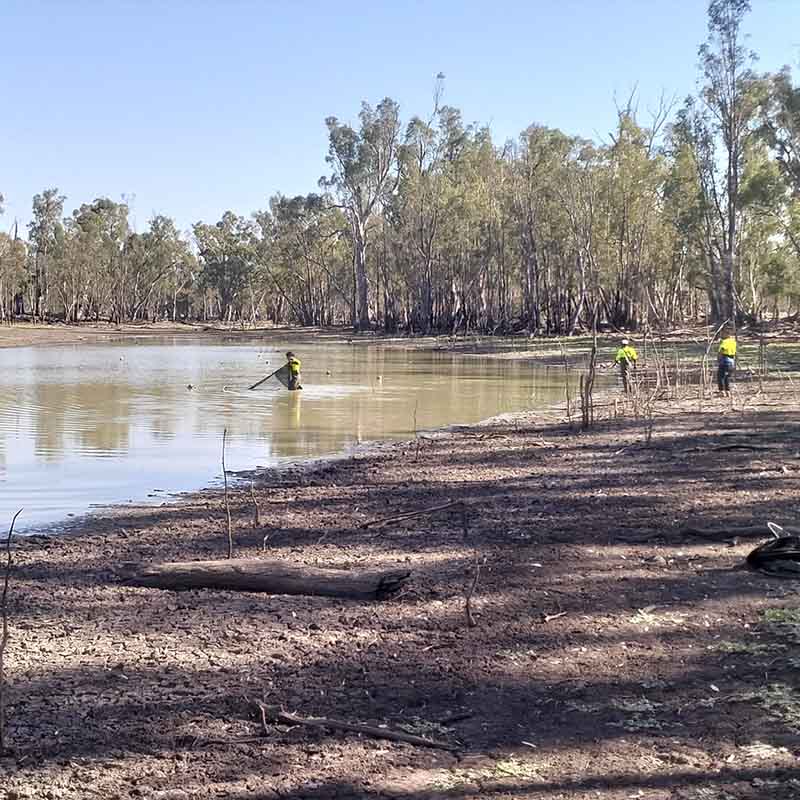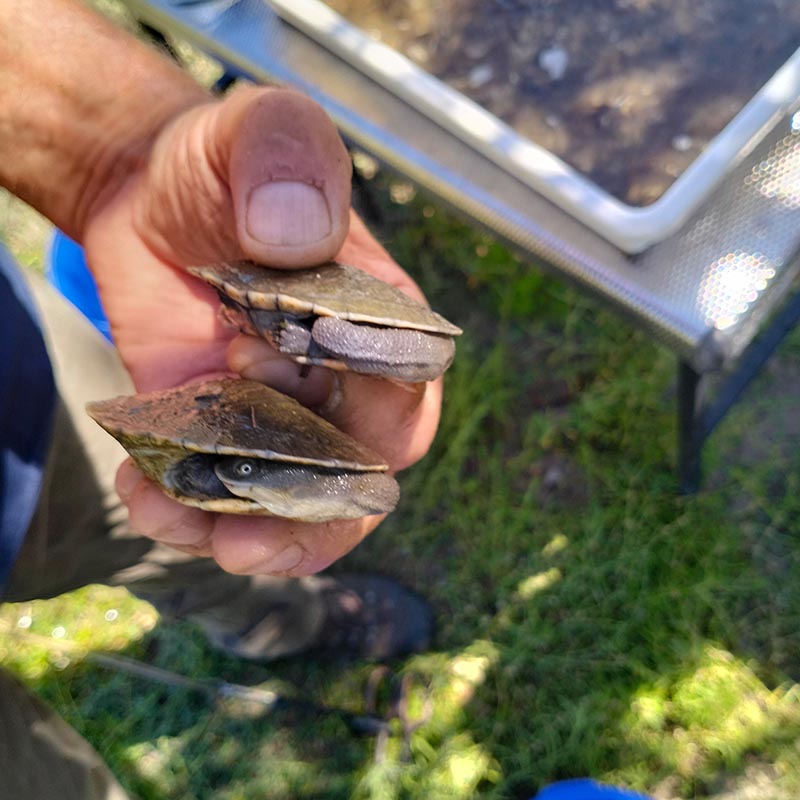
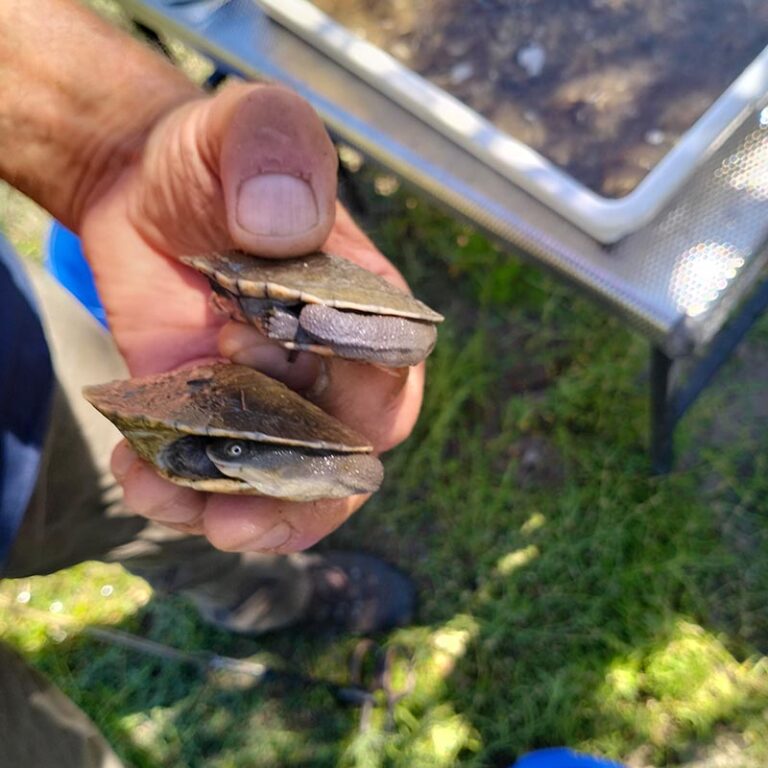
Moama Local Aboriginal Land Council’s Natural Resource Management (NRM) Crew undertakes annual freshwater turtle monitoring programs throughout the Koondrook–Perricoota Forest to better understand turtle populations, nesting habitats, and long-term recruitment trends across the floodplain ecosystem.
Freshwater turtles are an important indicator of wetland health and play a significant ecological role within the Murray-Darling Basin. Through ongoing monitoring, Moama LALC is helping identify critical habitat areas and informing future water management, habitat restoration, and pest animal control programs.
Monitoring Turtle Populations
Field surveys are conducted across wetlands, lagoons, flood runners, and forest waterways to identify areas where turtles consistently occur and return year after year.
The monitoring program focuses on:
Locating important turtle habitat and nesting areas.
Identifying breeding and recruitment hotspots.
Monitoring population health and abundance.
Recording turtle movement and habitat use.
Assessing environmental conditions that influence turtle survival.
Species Monitored
The program targets several native freshwater turtle species found within the Koondrook–Perricoota Forest, including:
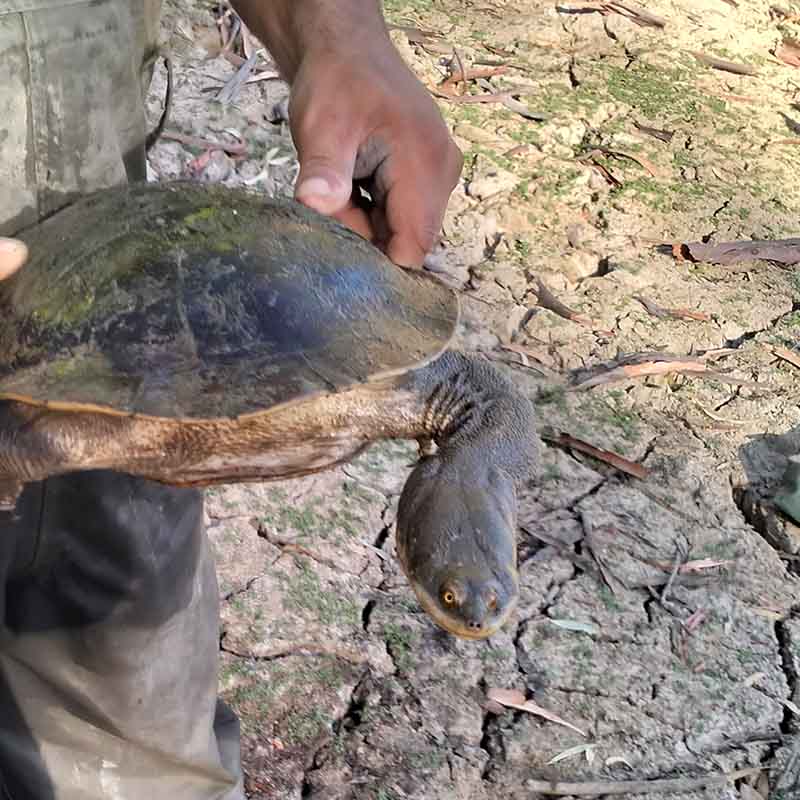
Eastern Long-Necked Turtle (Chelodina longicollis)
The Eastern Long-Necked Turtle holds special cultural significance as a totem species for Moama LALC. These turtles are commonly found in floodplain wetlands and are important indicators of healthy aquatic ecosystems.
Murray River Short-Necked Turtle (Emydura macquarii)
One of the most widespread freshwater turtles in the Murray-Darling Basin, this species relies on healthy wetland and river habitats for breeding and survival.
Broad-Shelled Turtle (Chelodina expansa)
A larger and less commonly encountered species that inhabits deeper waterways and floodplain wetlands throughout the Basin.
Data Collection
During monitoring activities, turtles are safely captured, identified, measured, and released back into their habitat.
Information collected includes:
Species identification.
Shell length and width.
Weight and body condition.
Sex determination.
Estimated age class.
Reproductive condition.
Capture location and habitat type.
This information contributes to long-term datasets that help track population trends over time.
Monitoring Recruitment Success
A key objective of the program is to compare current turtle populations with previous years’ monitoring data to determine whether conservation actions are improving juvenile turtle recruitment.
Particular attention is given to:
Numbers of hatchlings and juvenile turtles.
Breeding success rates.
Population age structure.
Survival of young turtles.
Changes in turtle abundance across monitoring sites.
Supporting Fox Control Programs
One of the greatest threats to freshwater turtle populations is predation of nests by introduced predators, particularly foxes. Foxes can destroy a large proportion of turtle nests each breeding season, significantly reducing hatchling survival.
Moama LALC works with partner agencies to evaluate whether intensive fox baiting and pest management programs are resulting in improved recruitment of young turtles throughout the forest.
Monitoring results help determine:
Whether fox control programs are reducing nest predation.
Which nesting areas require additional protection.
Where future baiting and pest control efforts should be focused.
How turtle populations respond to management interventions over time.
Informing Water Management
Turtle monitoring also assists with environmental water planning by identifying wetlands and habitats that are important for breeding, nesting, feeding, and refuge during dry periods.
The information gathered supports:
Environmental watering decisions.
Wetland restoration projects.
Habitat protection measures.
Long-term biodiversity conservation planning.
Caring for Country Through Science and Cultural Knowledge
The annual turtle monitoring program combines Traditional Ecological Knowledge with modern scientific monitoring techniques. By protecting culturally significant species and restoring healthy wetland ecosystems, Moama LALC continues to play a leading role in Caring for Country across the Koondrook–Perricoota Forest and the broader Murray-Darling Basin.